
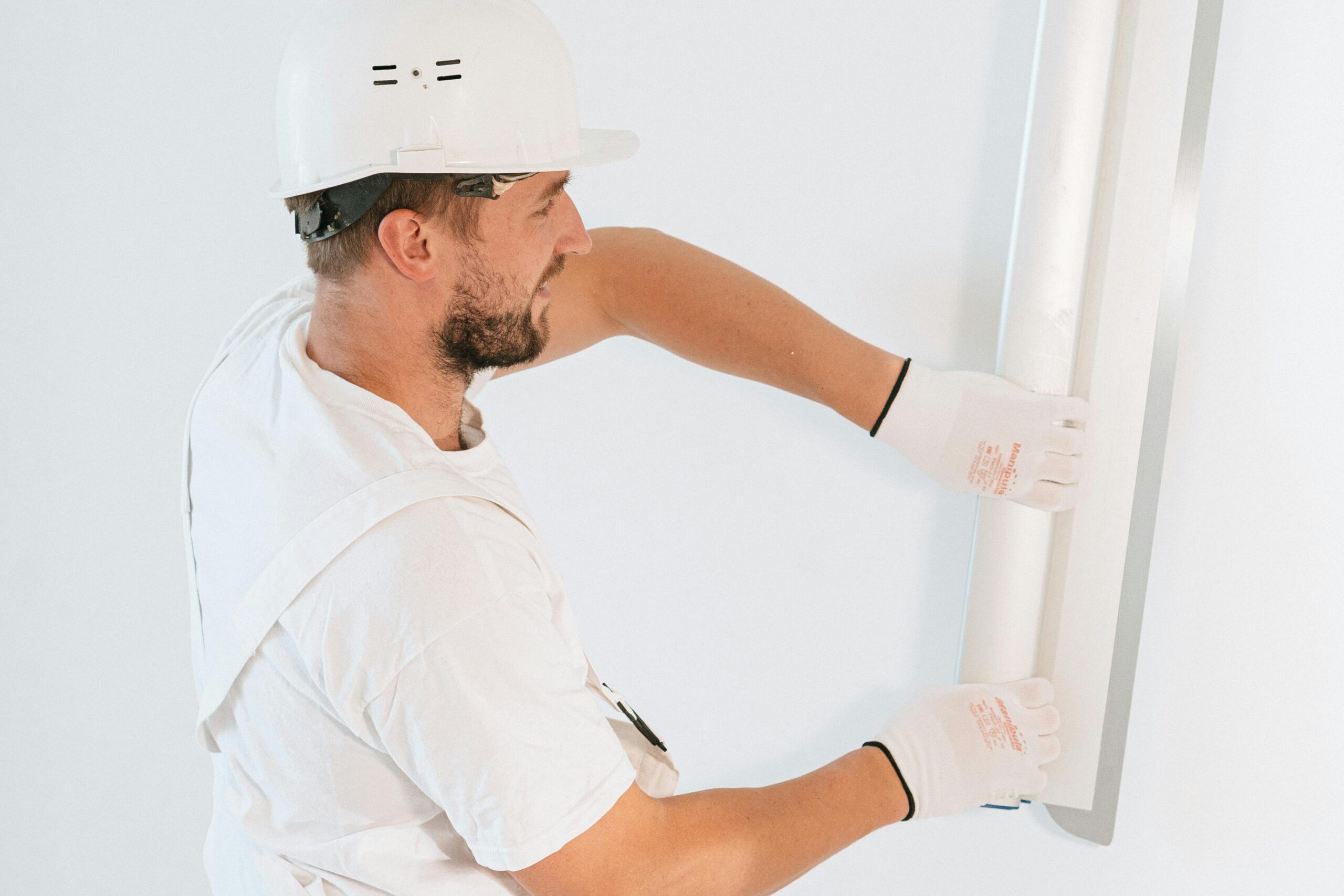
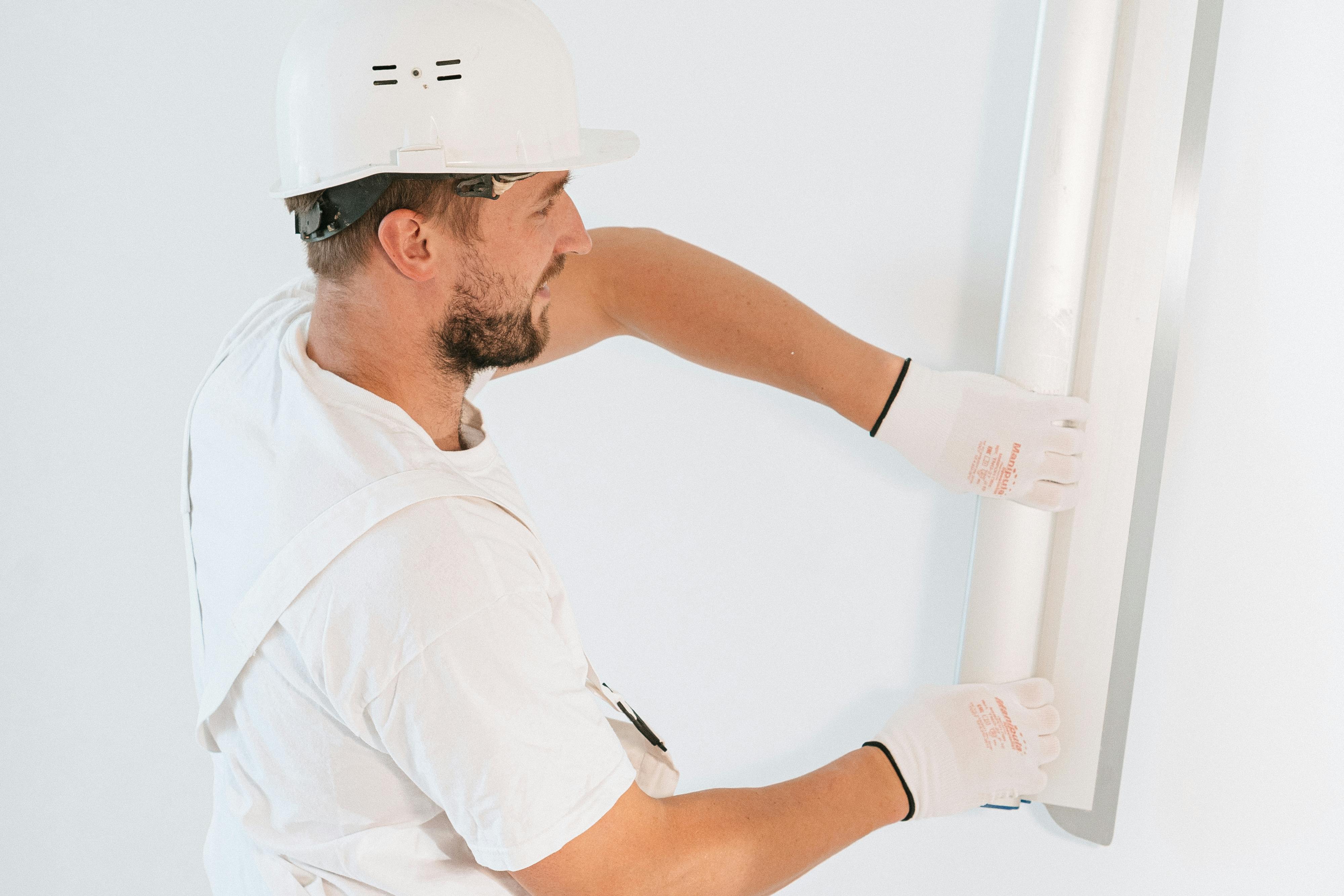
If you are planning a paint project and wondering whether the wall repairs can wait until later, the short answer is no. Drywall repair in Calgary is one of the most important steps in getting a paint finish that looks smooth, even, and professionally done. New paint does not hide defects nearly as well as most homeowners expect. In fact, once a wall has a fresh uniform colour, small dents, old patch edges, tape lines, nail pops, corner damage, and texture changes often become easier to see, not harder. That is why drywall repair should never be treated as a side note to interior painting. It is part of the finish.
The challenge is that many wall problems look minor until the prep begins. A room may seem paint-ready from a distance, but close inspection reveals cracked corners, uneven screw heads, poor previous repairs, patched anchor holes, ceiling stress lines, water staining, or surface fuzz from torn drywall paper. On older walls, you may also have visible sanding ridges from past repairs or a strange combination of flat paint, semi-gloss touch-ups, and builder-grade patches that reflect light differently across the same wall. That kind of inconsistency can make even a premium paint look cheap.
For Calgary homes, drywall prep matters even more because seasonal movement, dry winter air, and everyday family wear tend to expose weak areas. If your goal is clean, high-quality interior painting, it makes sense to plan drywall repair and finish painting together. Calgary Painter 4U already breaks this out on the drywall repair and drywall repair before painting pages, but this guide will walk you through what actually needs to be fixed, how to prioritize the issues, and why the repair sequence changes the final result so much.
Why paint makes drywall flaws more visible
People often assume a new colour coat will visually blend the wall and hide past problems. That only works when the surface is already in good condition. Paint changes colour, not geometry. If a patch sits slightly proud of the wall, if the feather edge is too tight, if a seam is lifting, or if sanding left ripples in the compound, a fresh coat often increases contrast because the entire area now reflects light in a more consistent way. The wall stops being visually noisy and the flaw becomes easier to isolate.
This is especially true in bright rooms, stairwells, long hallways, and any wall hit by side light from large Calgary windows. South-facing rooms and bright open-concept spaces reveal everything. A wall that looked “fine enough” under warm overhead lighting can suddenly show every imperfection when the sun moves across it. If you have ever repainted a room and then felt disappointed even though the colour was right, there is a good chance the actual issue was wall prep, not paint.
Drywall repairs also influence how the finish coat absorbs. Fresh compound, old painted drywall, stained areas, and previously patched sections do not all drink in primer and paint the same way. Without correct spot priming or full wall priming where needed, you can end up with flashing, dull spots, or visible patch outlines under the final colour. That is why proper drywall repair is not just filling holes. It is creating a stable, even surface for the finish system.
The most common drywall issues Calgary homeowners should fix before painting
Nail pops and screw pops are extremely common. They can show up as small circular bumps or broken paper rings, especially on ceilings, stairwells, upper hallway walls, and around framing movement. These are not fixed by smearing compound over the top and calling it done. The underlying fastener needs to be stabilized, the damaged area repaired, then feathered properly so it disappears after priming and painting.
Settlement cracks and corner cracks are another frequent issue, especially where walls meet ceilings, near door frames, at stair-step transitions, or in upper floor hallways. Some are cosmetic and can be repaired cleanly. Others indicate recurring movement that needs a more careful approach. If you paint over a moving crack without repairing it correctly, there is a good chance it will reappear quickly.
Old patches from mounted TVs, art walls, shelving, or plumbing/electrical work often cause the most frustration because they may technically be filled but not actually finished. A patch can be flat in the centre and still visible because the feathering is too abrupt. After painting, the perimeter shows like a halo. The fix is usually a larger, better-blended skim rather than simply sanding harder.
Water stains and discolouration need special attention. Even if the leak is old and resolved, stained drywall can bleed through if it is not sealed properly before repainting. If there is bubbling paper, softness, or lingering damage, the problem may be more than cosmetic. A painter should never just hide a water mark with finish paint and hope for the best.
Damaged corners and baseboard lines are common in busy family homes. Vacuum impacts, furniture movement, kids’ toys, pet damage, and cleaning wear can all leave lower wall sections rough and chipped. Because baseboard zones sit close to eye level when entering a room or hallway, these details affect how clean the entire home feels.
Torn drywall paper and over-sanded repairs are also big warning signs. Once the face paper is damaged, it may fuzz, bubble, or absorb paint inconsistently unless it is sealed and repaired correctly. Painting directly over damaged paper almost always creates a disappointing finish.
How to tell whether the repair is small, moderate, or extensive
Not every room needs the same level of drywall work. Some spaces only need localized filling and sanding. Others need broader skim work to unify the wall. A useful way to think about scope is to divide repairs into three levels.
Small repairs include nail holes, picture hooks, minor dents, isolated screw pops, or a few small scuffs. These are the kinds of problems that can be resolved quickly as part of a broader interior painting project. They still matter, but they do not usually change the whole schedule.
Moderate repairs include repeated anchor holes, visible old patches, corner cracking, damaged tape joints, chipped outside corners, or several damaged zones in one room. This level usually requires more sanding control, spot priming, and a more deliberate prep plan. It should be priced and scheduled intentionally, not squeezed in casually.
Extensive repairs include widespread seam issues, large cutouts, repeated settlement cracking, water-damaged drywall, poor historical patching across multiple walls, texture mismatch problems, or surfaces that need skimming to look right. At this point the drywall work becomes a central part of the project, not a minor add-on. Trying to rush directly to paint at this stage nearly always produces a result that still looks patched.
If you are unsure which category your walls fall into, look at the room from several angles, especially with daylight coming across the surface. Then compare that condition with the kind of result you actually want. A “good enough” repair might be acceptable in a utility room, but it will not feel good in a main floor living room or primary bedroom where smooth, calm walls matter.
Why texture matching and edge blending matter so much
Homeowners often focus on the centre of the patch, but professionals focus on the transition. That transition is what tells the eye whether the wall is continuous or repaired. If the repair edge is too abrupt, too high, too flat, or textured differently than the surrounding surface, it will read after painting. On textured walls, patching becomes even trickier because the finish pattern has to be recreated closely enough that the repair does not stand out from normal viewing distance.
On smoother walls, the standard becomes even higher. Modern homes with low-sheen designer colours, large open walls, and minimal decor leave fewer places to hide sloppy prep. The more refined the finish style, the more disciplined the repair work has to be. That is why drywall prep is inseparable from premium-looking paint. The final coat can only look as good as the surface beneath it.
If your home also needs updated wall colour or trim after repairs, it makes sense to connect the drywall scope with the broader interior painting and trim and door painting services. Separating those conversations often leads to mismatched expectations where the repairs were done to one standard and the finish painting was quoted to another.
The right sequence for drywall repair before painting
A strong result usually follows a disciplined order. First, damaged areas are identified honestly, not rushed past. Second, loose material, failing tape, popped fasteners, or unstable spots are corrected. Third, compound is applied in appropriate layers, allowed to dry fully, then feathered and sanded without leaving hard edges. Fourth, the repaired areas are dust-controlled and primed properly so they do not flash through the finish coat. Finally, the painter decides whether spot priming is enough or whether the entire wall should be primed for uniform absorption and sheen.
Skipping the primer decision is a common source of disappointment. Many homeowners think once the patch looks smooth, the finish paint can go right over it. Sometimes that works on very small repairs. On broader or more absorbent compound work, it often does not. The finish coat can dry dull over the patch, or the repair can telegraph through as a slightly different surface. A full wall prime is not always necessary, but when it is, it saves the result.
Once the wall is actually uniform, colour and sheen choices become more meaningful. This is when your painter can confidently recommend whether durable matte, eggshell, or another finish level makes sense for the room. Without sound prep, the sheen decision gets hijacked by the flaws underneath.
When drywall repair should be handled before getting final colour advice
Colour selection is important, but wall condition often comes first. If you are testing samples on walls full of patches, stains, or rough repairs, the sample does not represent the final room accurately. Surface texture, old damage, and inconsistent absorption can change how the colour reads. It is much easier to make good colour decisions once the walls are in predictable condition.
That does not mean you must finish every repair before meeting a painter. It means the painter should inspect the wall condition before locking in the final finish plan. This is particularly important in stairwells, older basements, hallways, and living rooms with heavy daylight. If you know certain zones are rough, say so early. The project will go more smoothly when repair scope and painting scope are priced together instead of being discovered halfway through.
Paint-shop resources in Calgary for primers, patch materials, and finish options
If you like to review products or colour tools yourself, Calgary has several useful local resources. You can compare primers and finish systems at Sherwin-Williams Calgary, explore coatings and prep materials through Cloverdale Paint, or review additional product options through The Paint Pros and the Dulux store locator. Even when your contractor supplies materials, these stores can help you understand sheen choices, stain-blocking products, and why primer selection matters.
Just remember that buying a better can of paint does not solve a poor substrate. The biggest upgrade still comes from fixing the wall properly first. Material choice should support the repair, not substitute for it.
How drywall repair protects the value of the entire paint project
When homeowners try to save money by minimizing drywall prep, the savings are often short-lived. If the finished room still shows patch outlines, popped screws, cracked corners, or obvious wall waves, the painting has not fully done its job. The room may technically be a new colour, but it will not feel truly refreshed. That means the project is less satisfying for you today and less helpful if you plan to sell or rent the property later.
By contrast, when repairs are handled well, the paint finish looks calmer, more uniform, and more expensive. The room feels maintained instead of merely coated. That is particularly valuable in entries, family rooms, stairwells, and hallways where guests and buyers naturally focus their attention. Drywall repair is not glamorous, but it often creates the difference between a quick cosmetic update and a finish that actually elevates the home.
What homeowners can do before the drywall and painting crew arrives
You do not need to know how to repair drywall yourself to make the project go better, but a little preparation helps. If possible, remove wall art, hooks, and decorative items from the rooms being repaired. Move small furniture and fragile decor away from the work area so sanding, patching, and priming are easier to manage safely. If you know there are hidden issues behind furniture, mounted televisions, or shelving, say that early. Many of the most frustrating surprises on paint day come from damage that only becomes visible once the room is opened up.
It is also useful to point out any recurring issues honestly. If a crack comes back every winter, if a stain showed up after an older leak, or if a patch was done previously and never looked right, that history matters. It helps the painter decide whether the area needs a simple touch-up, a more thorough repair, or a primer and sealing approach that goes beyond surface filler. Homeowners sometimes worry that mentioning repeated problems will make the project more complicated, but it usually helps create a much better result.
Finally, decide what quality standard you want in each room. A utility room may not need the same level of finish as a bright living room or main hallway. Being clear about which spaces need the cleanest appearance allows the repair scope to line up with the visual importance of the room instead of applying one vague standard everywhere.
Why cheap patch jobs often fail after the paint dries
The reason low-cost drywall repair often disappoints is not mysterious. The work is under-scoped. The patch may be filled once instead of built up in stages. The feather edge may be too narrow. The sanding may be rushed. Dust may not be fully removed before priming. Spot priming may be skipped altogether. Or the painter may move to finish coats before the repair has fully settled and dried. Each shortcut saves a little time in the moment, but together they almost guarantee that the wall will still tell the story of the repair.
This matters because the homeowner experiences the result for years, not for the few hours it took to save labour. A patch that still reads in side light, a corner crack that comes back immediately, or a wall that flashes over every repair is not a successful outcome just because it was cheaper on paper. In many cases, the more economical decision is to repair the wall properly once instead of paying twice for a fix and then a do-over.
There is also a design side to this. Modern paint colours, especially softer neutrals and low-contrast palettes, actually require better wall prep than older louder colours did. The cleaner the palette, the more obvious the flaws. That means drywall quality has become even more important for homeowners who want a modern, polished look instead of a quick cosmetic cover-up.
Frequently asked questions about drywall repair before painting
Can small dents and holes just be painted over?
They can be, but the wall will usually still show them. Even small defects become more visible once the new colour is uniform. Filling and sanding first is almost always the better choice.
Do all drywall patches need primer before paint?
Most meaningful patches should be primed. Fresh compound absorbs differently than painted drywall, and primer helps avoid flashing, uneven sheen, and visible patch outlines.
Why do old repairs show through new paint?
Usually because the repair was not feathered broadly enough, the surface texture does not match, the patch was not primed correctly, or the wall still has slight height differences that become visible in light.
How do I know if a crack is cosmetic or structural?
Small seasonal cracks are often cosmetic, but repeated widening, recurring movement, or cracks tied to door and window misalignment deserve a closer look. A good contractor can tell you when a repair is routine and when more investigation is needed.
Can drywall repair and painting be done in the same visit?
Sometimes, for very minor work. But many repairs need drying time, sanding, and priming between stages. Rushing the sequence usually lowers the finish quality.
Is it worth fixing walls in a basement before repainting?
Yes, especially because basement lighting often exaggerates patchiness and uneven surfaces. Clean prep can make a basement feel significantly brighter and more finished.
Should ceilings be repaired at the same time?
If the ceiling has cracks, stains, popped fasteners, or visible old repairs, it is smart to address them with the wall work. Fresh walls under a tired ceiling can make the ceiling look even worse by comparison.
Will matte paint hide bad drywall work?
It can soften the appearance slightly compared with glossier finishes, but it will not truly hide poor repairs. Bad geometry, weak feathering, or visible patch edges still show, especially in daylight.
Do repaired walls always need the whole room repainted?
Not every single repair forces a full-room repaint, but many visible repairs blend best when the entire wall or room is painted together. Spot touch-ups can stand out if the existing colour has faded or the sheen no longer matches.
What if I am planning to sell the house soon?
That is actually a strong reason to handle drywall correctly. Buyers notice wall condition quickly, and a room with smooth walls and clean paint feels far more maintained than one with obvious patches and hurried cosmetic fixes.
What is the next step if my walls are rough and I want the house repainted soon?
Start with a full assessment through the contact page so the scope includes the repairs, priming decisions, and final paint plan together. That is the easiest way to avoid paying for a colour change without getting the smooth finish you actually wanted.
Good drywall repair is not extra. It is the foundation of a better paint result. If you want walls that look truly refreshed in Calgary light, hold up well over time, and feel professionally finished from room to room, do the repair work first and let the paint showcase it instead of trying to hide what should have been fixed.
Leave a Reply